
Menu
You did everything right. The ring, the venue, the vows. So why does the first year feel like the hardest thing you've ever done together?
Let me tell you something nobody said at my wedding, not in the speeches, not in the cards, not from any of the well-meaning married people who hugged us at the reception and said you’ll love every minute of it.
The first year is hard. Not hard like something is wrong. Hard like growth, like adjustment, like two people who love each other trying to figure out how to actually live together in a way that doesn’t slowly drain the life out of both of them.
I’m three years in now. And I can tell you that what I needed in year one wasn’t more romance advice. It was someone to look me in the eye and say: this is normal, here’s what’s actually happening, and here’s what to do about it. So that’s what this is.
The first year isn’t the best year. For most couples, it’s the adjustment year. And adjusting is not the same as failing.
The wedding industry spends a lot of energy on the before. The proposal, the planning, the day itself. What it doesn’t prepare you for is the morning after — not just the honeymoon morning, but the ordinary Tuesday morning six weeks later when the flowers are dead, the thank-you notes aren’t finished, and you’re standing in the kitchen arguing about whose turn it is to deal with the recycling.
That Tuesday is where marriage actually begins. And most people arrive there completely unprepared.
These aren’t the things that show up in think pieces about marriage. They’re the things the couples I know — and I asked around, I did my research — say they wish someone had named out loud before year one started.
You spent months — maybe years — building toward the wedding. Then it’s over, and suddenly there’s no countdown, no shared project, no reason to be excited about the same thing at the same time. Some couples call this the ‘now what’ moment. It’s not a red flag. It’s a gear change nobody warned you was coming.
Logistics are seductive. It feels productive to sort out the joint account, the lease renewal, who handles the grocery order. But logistics are not intimacy. The couples who struggle in year one are usually the ones who confused being organized together with being connected together.
You assumed the ring would settle things. It rarely does. Marriage has a way of activating family members — opinions about holidays, money, children, where you live — with a renewed sense of entitlement. You are now officially a family unit, which somehow gives everyone else more to say about it.
Before marriage, a bad argument had an escape route in the back of your mind — even if you never planned to use it. That exit is gone now, and your nervous system knows it. Arguments in year one can feel disproportionately terrifying, not because your relationship is failing, but because it finally feels permanent.
Not dramatically. Not overnight. But slowly, some version of the person you were before starts receding. You become a spouse before you’ve finished becoming yourself. The ones who navigate this best are the ones who notice it early and protect their individual life on purpose — not because they’re pulling away, but because two full people make a better partnership than two halves.
Here’s the thing about year one: it’s not a test you pass or fail. It’s a calibration. You’re learning each other’s rhythms at close range for the first time, with all the pressure of permanence sitting on top of it. That’s not a small thing.
The couples who come out of year one closer — not just intact, but actually closer — tend to do a few specific things differently.
They talk about the marriage, not just in the marriage. That sounds abstract, but it’s not. It means having conversations about how things are going — not just logistics, not just complaints, but actual check-ins. Is this working? Are we connected? Are we heading somewhere together? Once a month. Not a big production. Just a deliberate pause.
They protect fun with the same seriousness they protect everything else. Bills get scheduled. Exercise gets scheduled. Somehow, fun — the thing that made you fall in love in the first place — is supposed to just happen. It won’t. You have to make it. Not grand gestures. A walk. One of those ridiculous couples games that ends with you both crying laughing. A dinner with no phones where you actually look at each other.
They let the fights be small. This sounds obvious but it isn’t. When arguments feel existential — and in year one they often do — there’s a temptation to make them mean something. To look for patterns, to catastrophize, to keep score. The couples who do better are the ones who can fight about the thing and only the thing. The recycling is just the recycling. It doesn’t have to be a referendum on the relationship.
Two people who love each other can still have a terrible first year. And two people who have a terrible first year can still build a great marriage.
The expectation hangover is real, and it’s worth naming directly. You spent months — maybe years — in the heightened state of engagement. Everything had meaning. Every decision was significant. The wedding itself was a peak experience by design.
And then it’s over.
What follows is ordinary life, which is actually beautiful, but which looks nothing like the highlight reel you’ve been living in. The couples who struggle most in year one are often the ones who interpret ordinary as disappointing. It isn’t. Ordinary is where everything real happens.
The goal of the first year isn’t to maintain the high. It’s to build something more durable than a high — a life that feels genuinely good to live, on the regular days, not just the special ones.
Some people have a genuinely hard first year and come out the other side saying it brought them closer. Some people have an easy first year and coast into problems they didn’t see coming. The first year is not a reliable predictor of anything, except this: how you handle the hard parts matters more than whether the hard parts show up.
Do you repair? Do you come back to each other after the argument instead of going cold? Do you stay curious about your partner instead of certain about them? Do you choose the relationship on the days when it doesn’t feel like a choice?
That’s it. That’s the whole thing.
Nobody told me that at the wedding. I’m telling you now.
Pick one night this month to check in — not about logistics, about you two. Ask each other: what’s one thing that’s felt hard lately, and one thing that’s felt really good? That’s the whole agenda. Fifteen minutes. You’ll be surprised what you find out.
Want a shortcut? Newlywed game questions are a check-in in disguise. Guess? turns “how well do you know me?” into a competition.
In this issue
Most skincare routines stop at the neck. Here’s a simple body care routine, under five minutes a day, plus a weekly ritual...
Read the story →
Worried about how you look, how long it’s taking, or whether you’re “doing it right”? Here’s how to stop performing and start...
Read the story →
Conflict isn’t the problem. Unrepaired conflict is. Psychoanalyst Jordan Dann shares five techniques to help couples fight better and repair faster.
Read the story →
When your partner is running on empty, it’s easy to end up on empty too. Here’s how to help them recharge while...
Read the story →
Ovulation apps, test days, and sex with a calendar invite: trying for a baby can test any couple. Here’s how to keep...
Read the story →
New habits, new goals, new you… and a partner who feels a step behind. Honest, friendly advice for couples when one of...
Read the story →
From $100K in debt to financial freedom in their early 30s, Ali and Josh Lupo of The FI Couple share how they...
Read the story →
Is that knot in your stomach a red flag or just your overthinking brain? A few simple tells, a quick quiz, and...
Read the story →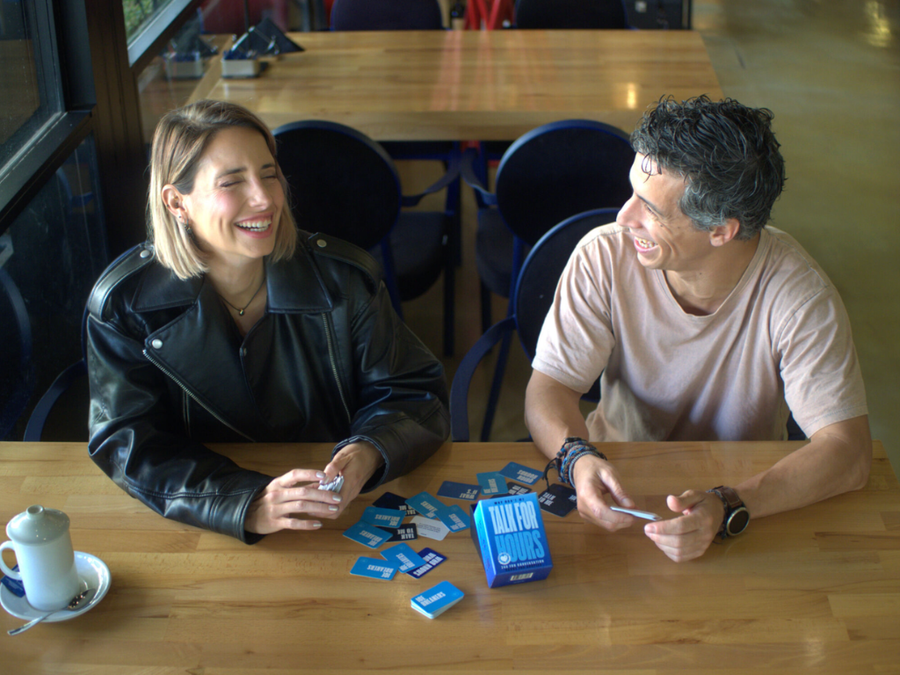
No phones, no plans, no agenda. The Decompression Date is the easiest (and most underrated) date you’ll take this year, and exactly...
Read the story →
Skip the outfits that only work in photos. From Sunday brunch to a night in, here are his and hers style picks...
Read the story →
In Spain, a good life isn’t measured in money or luxury, but in time: long lunches, siestas, and evening strolls. Welcome to...
Read the story →Your cart is currently empty.